

Why is learning C so much more generally useful than learning React? What I mean by the last point is that learning C tends to develop skills that are useful in a lot of other parts of software and tech work: if you know how to write decent C, you’ll have a much easier time of understanding PostgreSQL internals, for example, while if you’ve learned React, it’s anyone’s guess as to whether or not that’ll actually improve your HTML skills, for example.


Web developer. Lead developer of PieFed
- 6 posts
- 2 comments
Joined 3 years ago
Cake day: January 4th, 2024
You are not logged in. If you use a Fediverse account that is able to follow users, you can follow this user.


The Bank’s new policy suggests that bonds linked to thermal coal are now too risky to sit on its balance sheet, as an international shift away from dirty fossil fuels towards greener energy could end up wiping out their value.


Contribute to the Canvas! https://canvas.fediverse.events/
Find artworks to contribute to here: https://toast.ooo/post/15150031
If this is the first time seeing this, Canvas is a collaborative pixel canvas that runs every year, just for 48 hours. Anyone in the Fediverse is welcome to join!
Socials
Out of the 37,000 people who voted for posts or comments in the last month, the 10 most prolific voters (0.02% of us) cast as many votes as the bottom 59%. Here’s how that looks, visually:
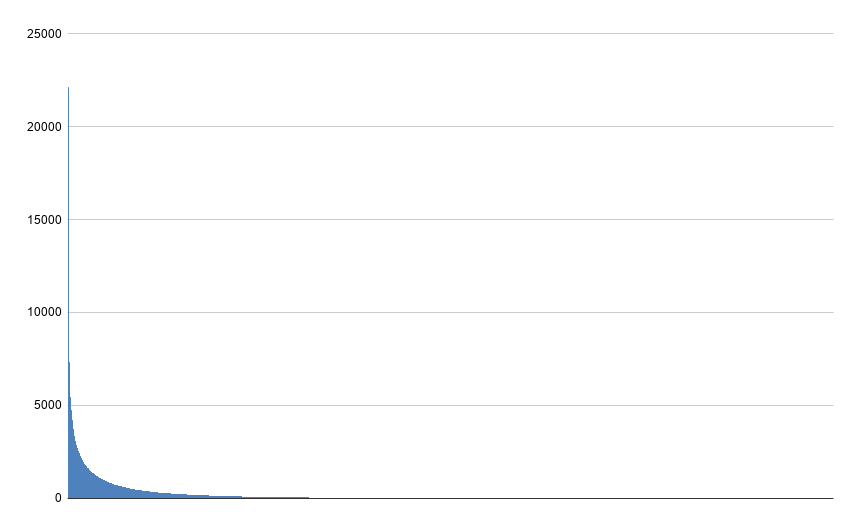
As you can see, a lot of people didn’t cast many votes. Someone cast 23k votes, with a group of 13 each casting at least 10k votes.
“But of course most people aren’t really engaged, most of those 37k people are just NPCs who don’t really matter” you say, “Rimu you’re just including them to make it seem worse than it is”, you might say. Ok, cool, let’s pretend the bottom 85% of us don’t matter and just look at the top 5000 voters. Here’s how the distribution looks among them:
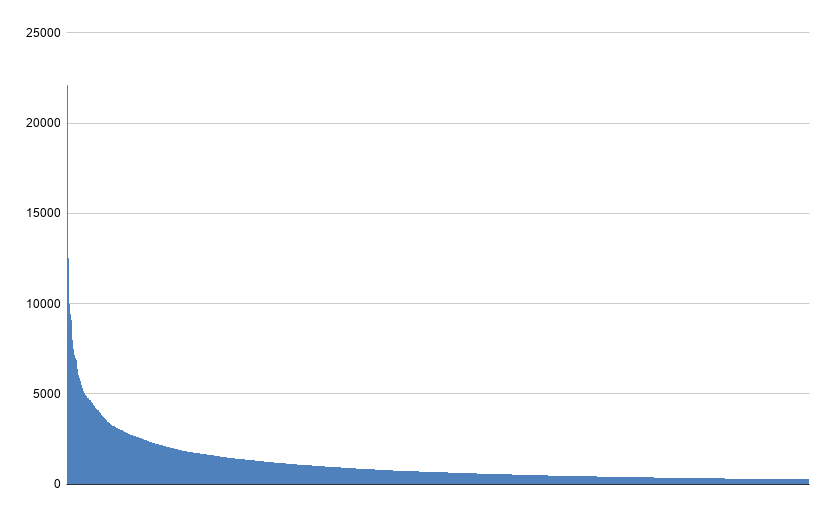
Still super unbalanced. Let’s analyze this a bit.
Among those 5000, the top 147 (2.94%) cast as many votes as all the others (4853 people) combined. Among those 5000, the average number of votes cast in a month is 1142. Among the top 147, the average number of votes cast in a month is 6868.
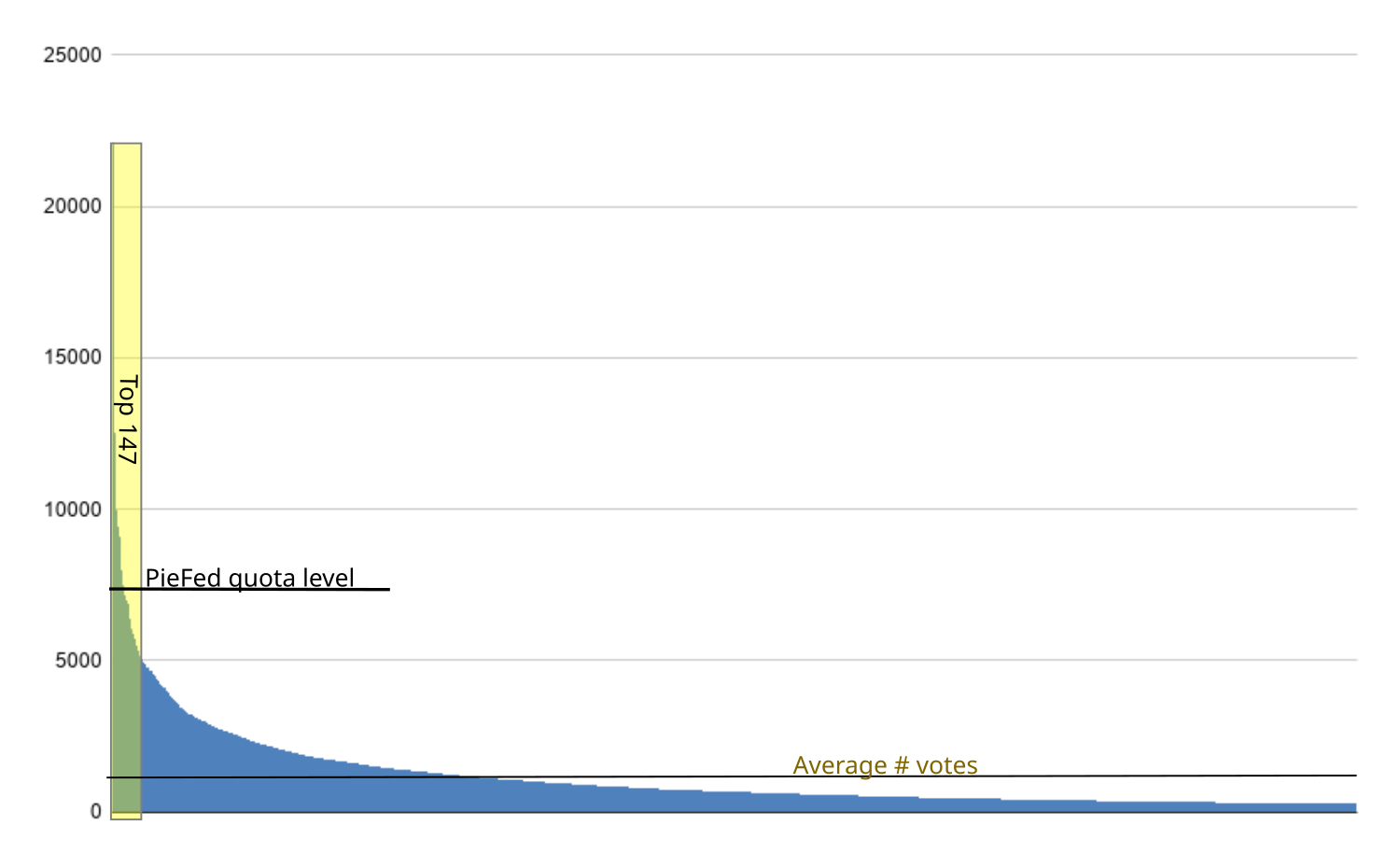
How do you feel about a tiny group having this much influence over what news you receive?


We’ve waited a decade for this railway. Here’s what it will actually be like.


Only 1% of domestic wells mapped were in areas predicted to have nitrate concentrations below 1mg/L and almost half (49%) were in areas predicted to have concentrations within a range of 3.5 to 8.5mg/L, with a further 5% predicted to exceed 8.5mg/L, with some of these above 11.3mg/L.
The maximum allowable nitrate in drinking water is 11.3mg/L, but the National College of Midwives has warned pregnant women about levels exceeding 5mg/L risking preterm birth and low birthweights and public health academics have said levels below this may be a concern, including as a cause of colorectal cancer.
Ms Prickett said any level above 3.5mg/L was indicative of “serious degradation of environmental health let alone public health”.
 5 months
No, it’s legit. Elena has been tooting and peertubing about the fedi and her self hosting journey for over a year.

Here’s the segment:
https://www.youtube.com/watch?v=yI-0FKFfO54
He seemed pretty coherent to me. At times clearly thinking faster than his mouth can keep up but really no big deal.
Pretty interesting how he’s fully accepted that there will be “a wealth tax” as a result of a backlash against AI. And how the CEOs he knows are “livid” about how totally useless AI is even after they jumped in boots and all, lol