I am completly opposed to Air-conditions propagandized as a solution to climate change. What is the wright approach to combating this state of temporary relief except from old-fashioned fans? Don’t get me wrong. They do the job for me. I am reffering to finding a solution for people more with health issues or large facilities that are in need of something more drastic.
Solarpunk
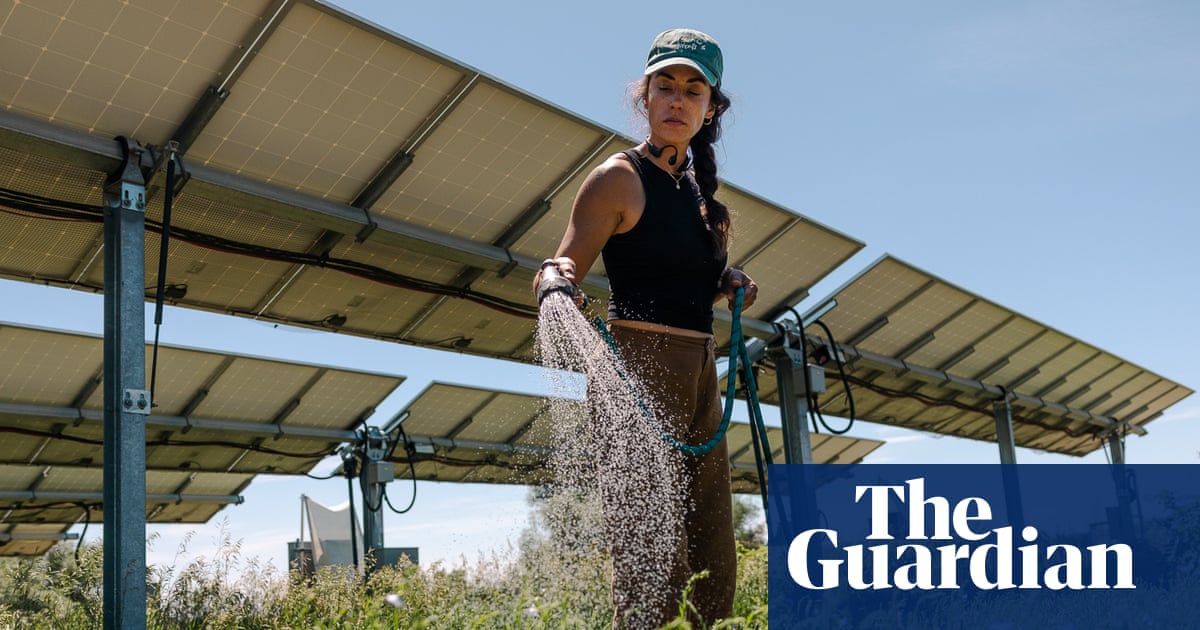
More than 3,000 solar panels power Jack’s Solar Garden, cool the land and help it turn a profit
nice!
link to open access paper https://besjournals.onlinelibrary.wiley.com/doi/10.1002/2688-8319.70259
Peatlands in Europe have been used for hundreds of years in the form of low-intensity agriculture, forestry and peat cutting (Joosten et al., 2017). Many species characteristic of mires (i.e. intact, peat forming peatlands) evolved alongside low-intensity agricultural practices such as grazing and mowing which occurred without fertilization and with minimal to no drainage (Joosten et al., 2017; Silva-Monteiro et al., 2021). Because agriculture now dominates a large extent of the landscape, most birds that breed or winter in open habitats like peatlands now utilize agricultural fields at least partially, and thus many peatland species can also be broadly considered agricultural species (Newton, 2004).
Modern-day intensive agriculture and peatland drainage are contributing to a rapid decline amongst agricultural species (Rigal et al., 2023). In particular, the use of pesticides and fertilizers has been identified as the biggest cause of bird decline in Europe, which has been particularly impactful for insectivorous species (Donald et al., 2002; Rigal et al., 2023). Peatland drainage dries out the topsoil layer reducing prey accessibility, and clutch mortality of ground nesting birds has risen due to mowing during the breeding season (Newton, 2004; Silva-Monteiro et al., 2021). Herbicide use reduces seed production, plant diversity and therefore also arthropod diversity, reducing food availability for birds (Newton, 2004). The use of fertilizer, seeding and frequent mowing has changed grasslands from structurally and species diverse areas to fields dominated by dense, fast-growing species, with reduced tussock forming species that provide structure for ground nesting bird species (Newton, 2004; Vickery et al., 2001). At a landscape level, a shift to monocultures has resulted in the decline of species that rely on a mix of habitat to provide multiple food sources (Newton, 2004).
Solar parks have emerged as a new form of land use and studies have shown mixed results, including reduced species richness compared to grazed grassland (Visser et al., 2019), and greater species richness compared to arable farmland (Copping et al., 2025), or compared to both arable farmland and grassland (Jarčuška et al., 2024; Montag et al., 2016). The response of birds to the solar park may depend on site management, such as whether parks are designed with biodiversity in mind, for example by including hedges, wildflower meadows, etc. (Copping et al., 2025). Studies have demonstrated that solar parks can provide habitat for species in an otherwise homogenous and habitat-depleted landscape, such as those dominated by high-intensity agriculture (Copping et al., 2025).
In this study, we assessed the species diversity of birds using bioacoustics. A space-for-time substitution was used, and therefore, one solar park site was compared with two adjacent intensively managed grassland sites on drained peat soil, which are representative of the former land use.
“A large part of the success … doesn’t depend so much on the physical phenomenon itself, but rather on investment and communities that are well organized and see a benefit in this,” del Río said. “The successful cases happen precisely in those kinds of circumstances.”
My philosophy is that in order to get good habits that save the climate and environment there has to be non-ideological benefits. Money, laziness, reliability, etc.
Reframing actions is in my opinion the right way forward. At least to help others into doing the right things. I am excited to hear your ideas.
FYI: Norway
Repair Avoid the work of finding the replacement, period of not being able to use it, getting rid of the packaging/trash etc. Not being able to use a smartphone or PC is incredibly frustrating. Repair is faster than sending it in to the seller. Money is also a bonus.
No car No car is simply to avoid stress, maintenance, parking, and of course money.
Buying used Used is often nice as it saves me the time to build the IKEA furniture, delivery to my door, cheaper etc.
Selling used Can get rid of large items without carrying it out. Not having have to take it to the recycling center.
Growing herbs Simply higher quality, and always having it available
Public transit Able to focus on something else than driving. I prefer playing games, reading, etc. Safer. Cheaper. Also more walking which gives health benefits.
Apartment living Close to no maintenance, a house is soooo much work. Not something I am willing to spend my life doing (I have tried).
Airtravel Meh, too many hurdles. Should be a really good reason or very long distances on rare occasions. For shorter distances trains is a lot more comfortable. An airplane is far from the hour you spend in the air. It includes the waiting, security, boarding, travel to airport etc. I’d rather travel and stay a place for multiple weeks, not going through all those hurdles for a weekend or only a week, atleast 2-3 weeks, preferably longer.
More ideas?

cross-posted from: https://slrpnk.net/post/40436334
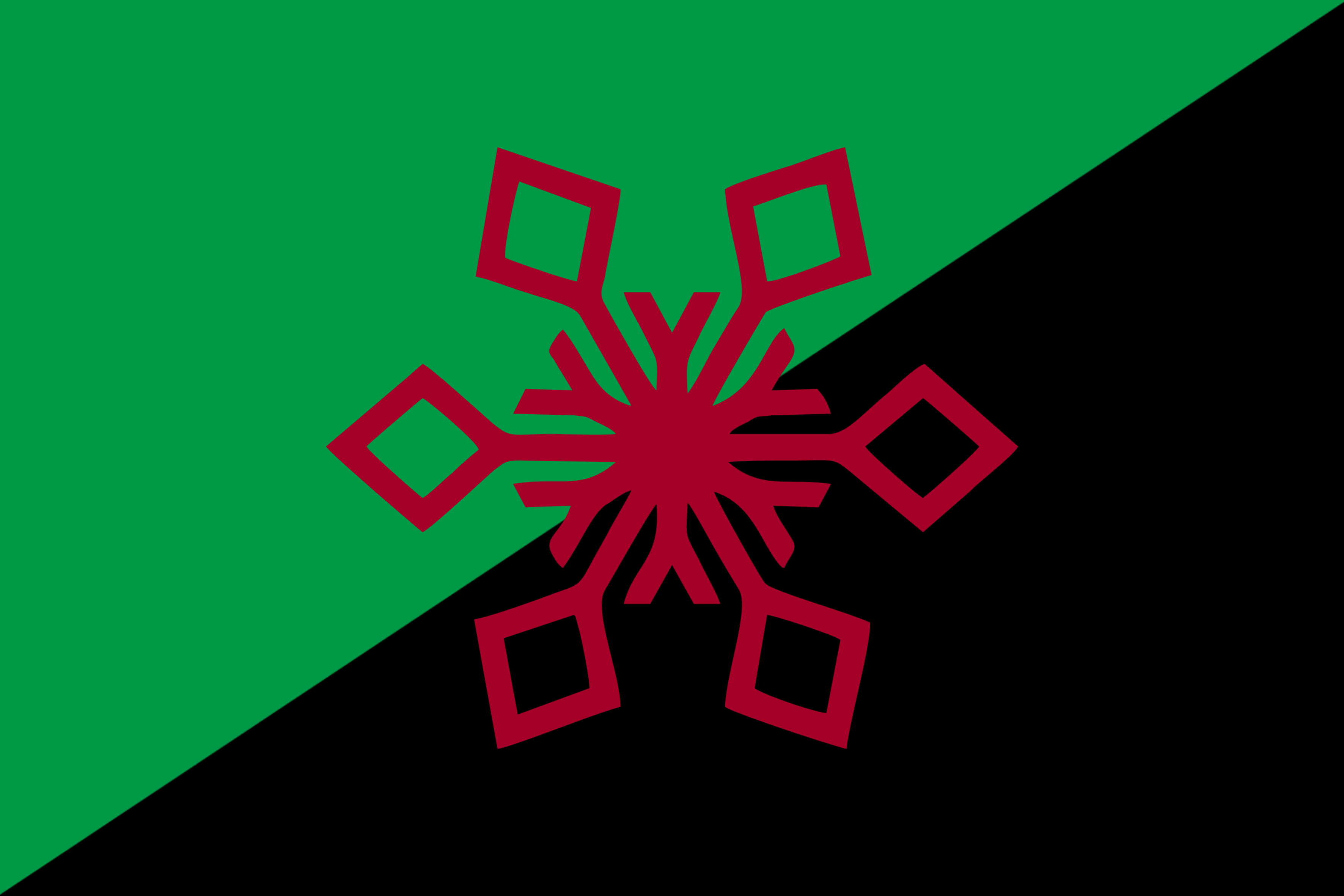
The green represents the need for ecological revolution, whilst the black is a nod to the original black anarchist flag. The blood red snowflake represents how the environment is dying from eco-fascism.
Edit: no, anarcho-communism is not the same thing as fascism. This is anarcho-communism for reference. Plus, this flag is made from the Canadian perspective of the melting permafrost and Arctic.
I feel like I always think of solar punk as a macro thing where a lot has to change but there are still smaller wins we can implement, what have you been doing?

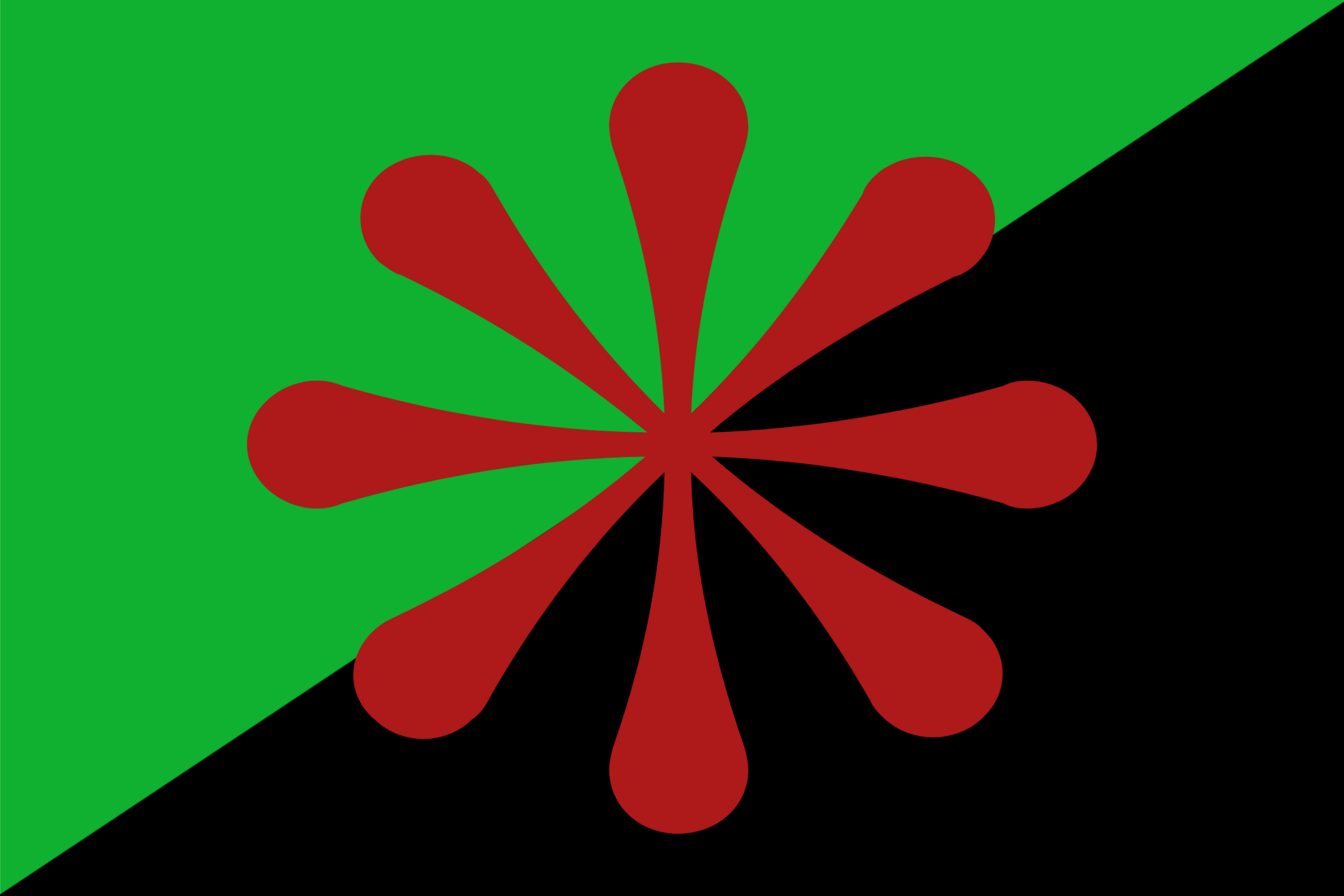
The green represents the need for an emphasis on ecological change, whilst the black is in reference to the black anarchist flag (here’s some historical context).
The red 8-sided asterisk represents the urgency for communities to cooperate in ridding the planet of eco-fascism. I picked the 8-sided one to represent the worldwide need for change.
Edit: anarcho-communism is not a type of fascism. Y’all do realise that this is a leftist Lemmy instance, right?
Khushalsar and Gilsar are living examples. When we started Mission Ehsaas, many people laughed at us. They said, ‘We’ve seen these things before. You will take your money and disappear.’ I told them only one thing: Give me a week and don’t disturb me. Let our work speak.’
Within days, we managed to reopen part of the blocked navigation channel. People began to notice that something was actually changing. Slowly, they started believing and joining us. Over the next 100 days, nearly 1,000 truckloads of waste and muck were removed. Water that had remained stagnant for decades started flowing again.
That is the power of community participation. When people, stakeholders and the administration come together, anything and everything is possible.

EDIT 2: There’s apparently a page on Canvas where teams can propose where their template will be on the canvas, which may help ‘reserve’ a spot for us.
EDIT: Now is the time to propose your templates! Pixelorama is a great free pixel art tool to use for it. Try to get your proposal in by July 16th so we can decide which to do! :)
The Canvas event is the Fediverse’s take on r/place, I.E, a collaborative artwork where every participant can place down a single pixel every 30 seconds.
This limitation means the only way to assemble a larger piece of art is for people to come together in groups to collectively decide what they’ll be drawing (usually with a pixel art template someone proposes), where it will be on the canvas, and communicate with other groups working on neighboring artworks so as not to impede their efforts, or even to negotiate mutual aid treaties to help maintain each other’s art from potential hit-and-run attacks.
SLRPNK participated in 2024’s Canvas event, which @Five@slrpnk.net documented in one of our previous Monthly Meta’s. There’s also a fun timelapse from last year’s Canvas event here.
If there are any Solarpunks interested in participating this year, this thread might be a good place to organize and collaborate :)
The Canvas Event will take place at this link On July 18th 04:00 UTC, and run for 48 hours. Here is their official post about it for more details.
So i thought this fits here, he calls the boat Helios 11 and builds it with very little experience. He docunents the adventure quite well and shares what he learns, and also shares all the plans for the boat for free.
I’m always looking for things to add to my RSS reader! I loved the Hundred Rabbits site that was posted here recently and thought others might have some nice submissions.
I recently found Sunshine and Seedlings which is substack, alas, but has some great content.
I’m also a fan of Low-tech Magazine.
Solarpunk is a movement in speculative fiction, art, fashion, and activism that seeks to answer and embody the question “what does a sustainable civilization look like, and how can we get there?”
The aesthetics of solarpunk merge the practical with the beautiful, the well-designed with the green and lush, the bright and colorful with the earthy and solid.
Solarpunk can be utopian, just optimistic, or concerned with the struggles en route to a better world , but never dystopian. As our world roils with calamity, we need solutions, not only warnings.
Solutions to thrive without fossil fuels, to equitably manage real scarcity and share in abundance instead of supporting false scarcity and false abundance, to be kinder to each other and to the planet we share.
Solarpunk is at once a vision of the future, a thoughtful provocation, a way of living and a set of achievable proposals to get there.
- We are solarpunks because optimism has been taken away from us and we are trying to take it back.
- We are solarpunks because the only other options are denial or despair.
- At its core, Solarpunk is a vision of a future that embodies the best of what humanity can achieve: a post-scarcity, post-hierarchy, post-capitalistic world where humanity sees itself as part of nature and clean energy replaces fossil fuels.
- The “punk” in Solarpunk is about rebellion, counterculture, post-capitalism, decolonialism and enthusiasm. It is about going in a different direction than the mainstream, which is increasingly going in a scary direction.
- Solarpunk is a movement as much as it is a genre: it is not just about the stories, it is also about how we can get there.
- Solarpunk embraces a diversity of tactics: there is no single right way to do solarpunk. Instead, diverse communities from around the world adopt the name and the ideas, and build little nests of self-sustaining revolution.
- Solarpunk provides a valuable new perspective, a paradigm and a vocabulary through which to describe one possible future. Instead of embracing retrofuturism, solarpunk looks completely to the future. Not an alternative future, but a possible future.
- Our futurism is not nihilistic like cyberpunk and it avoids steampunk’s potentially quasi-reactionary tendencies: it is about ingenuity, generativity, independence, and community.
- Solarpunk emphasizes environmental sustainability and social justice.
- Solarpunk is about finding ways to make life more wonderful for us right now, and also for the generations that follow us.
- Our future must involve repurposing and creating new things from what we already have. Imagine “smart cities” being junked in favor of smart citizenry.
- Solarpunk recognizes the historical influence politics and science fiction have had on each other.
- Solarpunk recognizes science fiction as not just entertainment but as a form of activism.
- Solarpunk wants to counter the scenarios of a dying earth, an insuperable gap between rich and poor, and a society controlled by corporations. Not in hundreds of years, but within reach.
- Solarpunk is about youth maker culture, local solutions, local energy grids, ways of creating autonomous functioning systems. It is about loving the world.
- Solarpunk culture includes all cultures, religions, abilities, sexes, genders and sexual identities.
- Solarpunk is the idea of humanity achieving a social evolution that embraces not just mere tolerance, but a more expansive compassion and acceptance.
- The visual aesthetics of Solarpunk are open and evolving. As it stands, it is a mash-up of the following:
- 1800s age-of-sail/frontier living (but with more bicycles)
- Creative reuse of existing infrastructure (sometimes post-apocalyptic, sometimes present-weird)
- Appropriate technology
- Art Nouveau
- Hayao Miyazaki
- Jugaad-style innovation from the non-Western world
- High-tech backends with simple, elegant outputs
- Solarpunk is set in a future built according to principles of New Urbanism or New Pedestrianism and environmental sustainability.
- Solarpunk envisions a built environment creatively adapted for solar gain, amongst other things, using different technologies. The objective is to promote self sufficiency and living within natural limits.
- In Solarpunk we’ve pulled back just in time to stop the slow destruction of our planet. We’ve learned to use science wisely, for the betterment of our life conditions as part of our planet. We’re no longer overlords. We’re caretakers. We’re gardeners.
- Solarpunk:
- is diverse
- has room for spirituality and science to coexist
- is beautiful
- can happen. Now!