(When I was planning some of the longer hikes I often struggled to find the most important info for me. You can easily find GPS tracks but those don’t really tell you what type of a route is it: How remote it is? Is there water? Can you find food? Where can you camp? So here are some of the routes I did and some basic info about them)
Starting with a bit more exotic option: GR 131 on La Palma island. Also called “El Baston” because it kind of looks like a walking stick.
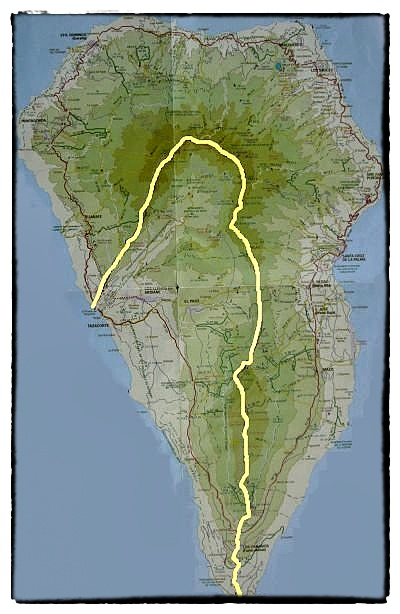
General info: The route follows a natural ridge of the volcano that formed the island. It passes through national park, astronomical observatory and many volcanoes.
The route can be done in 3 days. It’s 63km but 3.794m of total ascent. Can be done throughout the year.
Getting there: The island is small and there are plenty of bus routes. You can easily get to both ends of the route from Santa Cruz de La Palma and back.
Remoteness: The route passes through “Roque de los Muchachos”, highest point of the island and astronomical observatory. This point can be reached by car and is a popular tourist destination. Other than that I don’t remember seeing anyone during the 3 days of hiking. The first/last town you pass through is Los Canarios, few kilometres from the start/end of the route.
Water: No water. You pass through Punta de Los Roques shelter in about the middle of the hike. There is a water deposit there that is re-filled periodically but you cant really count on it. You have to carry water for the whole hike.
Camping: As I mentioned there’s a refuge that you could probably use when starting in Fuencaliente and going north. Walking the other way I passed next to it in the afternoon so I didn’t sleep there. You can camp pretty much anywhere. It’s legal to sleep anywhere in the mountains but you can only camp in designated areas during the day. Obviously don’t start any fires.
Dangers: Other then the remoteness itself - none. The route is well marked and safe.
Overall: Highly recommended. It’s a remote but well maintained route. Short but definitely on the difficult side. Climbing from a see level to the highest point of the island is a nice challenge. Great views from the top and volcanic scenery along the way make it all worth it.
What else to do: La Palma prides itself in the quality of it’s hikes and you will find plenty of other quality routes there. Short flight/ferry trip away is also Tenerife with Teide, highest peak of Spain.